“Number 5 stupid name... want to be Kevin or Dave!”
—Johnny 5
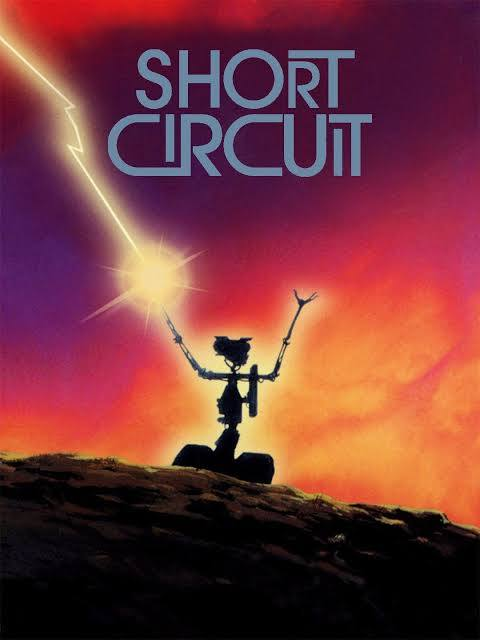
Short Circuit tells the story of a robot struck by lightning who acquires self-awareness and begins exploring the world. Johnny 5 is full of emotion and curiosity, even imitating human behavior and thought. That imaginative premise moved Lai Jie as a child.
As Astribot’s founder, he now has an opportunity to pursue what he calls “real intelligence”: aligning information in a high-dimensional space, so robots become more than command-executing tools. His ambition is for them to understand their surroundings, respond to emotions and learn autonomously—an aspiration rather than a claim that they are already living beings.
His story begins in 2009. Early work focused on traditional control and robot-body design. He had not yet imagined that the intersection of AI and robotics would become his future arena.
From 2009, he began exploring reinforcement learning, finding a new research direction and investigating how advanced AI algorithms could control robot motion.
In 2014, as Baidu expanded its commitment to AI, Lai recognized a signal of change. He joined the company and led the building of its robotics team. Baidu had made progress in natural-language processing. Alongside robotics research, he considered a larger question:
“Where will the combination of AI and robotics take us?”
He realized that although AI was developing rapidly, robotics was progressing more slowly.
In 2018, after careful consideration, he left Baidu and joined Tencent as one of the earliest members of its robotics laboratory. Under Professor Zhengyou Zhang, he and the Robotics X team explored the intersection of AI and robotics more deeply.
Zhang had predicted that their fusion would bring a revolution beyond our present understanding. That became part of Lai’s motivation to start a company.
The year 2022 was complicated and a major turning point in his career. He and Dai Yuan decided to found Astribot.
Their goal was clear: they regarded the fusion of AI and robotics as a once-in-fifty-years opportunity, like the revolution brought by combining hardware and software in the personal-computer industry.
Over more than two years, the team followed a “Design for AI” philosophy, building robots with more human-like configurations, precise force control and efficient tactile feedback.
The aim is to help robots fit into everyday life and create an unprecedented new relationship between robots and people.
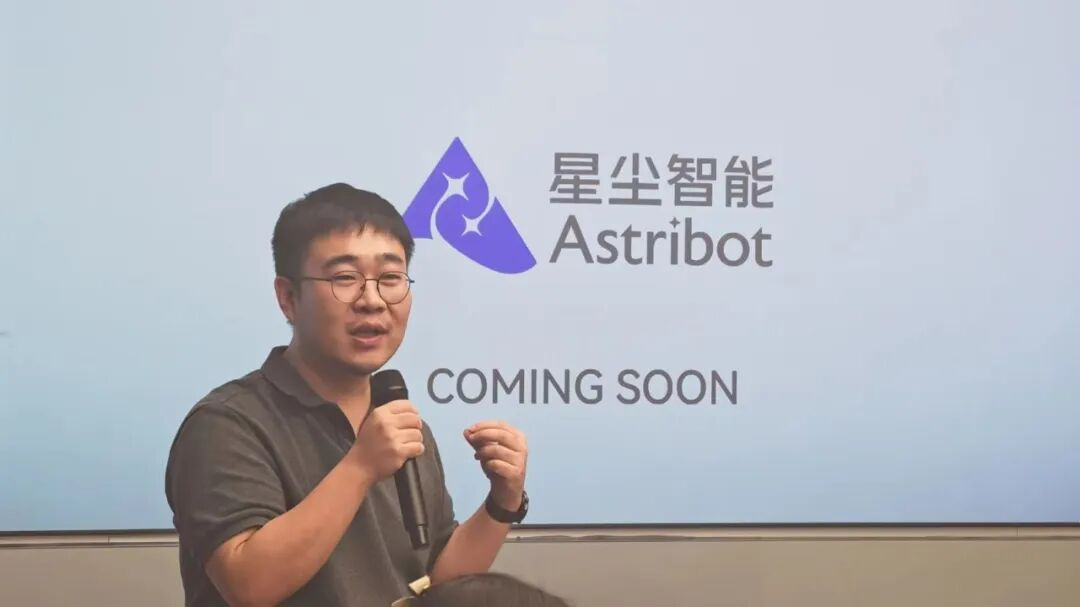
Lai Jie and Astribot
As night falls and starlight reaches the quieter landscapes of Nansha and Zhongshan, Lai often takes his telescope out to look at the sky. Countless mysteries await discovery there, alongside his most unguarded dreams about the vast universe overhead.
“One day, when a robot completes a journey around the Moon, people will look up and feel the universe’s immensity and mystery. That moment will awaken imagination and anticipation of the unknown—some of humanity’s deepest feelings and desires.
“We build robots hoping to make that possible, helping humanity broaden its horizons and explore more possibilities. People may not believe it now; it may seem impossibly distant. But one day they will begin to believe, see and feel it. In a sense, robots can free human creativity and curiosity. That is the value we truly seek…”
This ReSpark episode welcomes Astribot founder Lai Jie and Ted, an angel investor from Decent Capital. It is a fascinating conversation; we invite you to listen.
Podcast: EP05: Lai Jie on Astribot and a Journey to the Stars (listen in the original WeChat article).
Below is the full interview, edited by ReSpark. Enjoy!
Original article outline
Interview highlights
AI and robotics: a once-in-fifty-years opportunity
Understanding robotics through the development of the PC
AI and robotics as the starting point of an intelligence revolution
Building a robot world model
Design for AI
Astribot’s design philosophy
Actuation, touch, models and data
How robotics can advance AI
A new relationship between robots and people
Imagining applications five and ten years ahead
How robots fit into everyday life
Robots as a platform for creating new content
The starry sky above and the moral law within
The origins of a love for robotics
Reflections on entrepreneurship
Astribot’s vision of the stars
AI and robotics
A once-in-fifty-years opportunity

----------
----------
Astribot 🤝 Physical Intelligence: working together for mutual success—created for you, made intelligent for you! #Astribot #AIrobots #WorldModel #AGI #Generalization (watch in the original WeChat article).
ReSpark: When Astribot started in September 2022, GPT-3.5 had not yet appeared and embodied intelligence had not become the popular concept it is today. You began very early. What opportunity did you see? [Editor’s note: “September” is the interviewer’s date; Astribot’s official history gives December 2022. Embodied-intelligence research itself long predates 2022.]
Lai Jie: I spent substantial time studying the PC industry’s history, especially the crucial period from 1975 to 1986.
Its rise came from close integration of hardware and software. Initially, ordinary people saw computers as extremely complex and practically unusable. As hardware and software developed together, two essential changes happened:
First, ordinary programmers could program without understanding electronics; earlier programmers had needed that knowledge. Second, software developers made the PC a more general-purpose foundation, gradually attracting more users.
I analyzed major events almost every six months across that period and reached an important conclusion:
We now face a once-in-fifty-years opportunity: the fusion of robotics and AI, analogous to the revolutionary combination of hardware and software in PCs.
We think it will extend beyond research. Starting with researchers, it can progress to ordinary programmers developing robots, then to the wider public. That newly created market is the largest opportunity.
The pattern resembles personal computers, but differs from the mobile-internet revolution. Mobile internet was a second growth curve of the information revolution, not its origin. AI plus robotics, in my view, begins an intelligence revolution: robotics is its starting point.
ReSpark: How should we understand that starting point?
Lai Jie: Having worked on NLP, I now strongly feel that information can be aligned in a high-dimensional space. Language, however complex, can explain many things, including pictures. Across fields, transformers show how different information can align in a shared space.
I think that alignment is approaching quickly. We have methods; what is missing is data. At that moment, I felt I had grasped something about “real intelligence.”
To me, real intelligence means aligning information in a high-dimensional space.
That realization was powerful. Different encodings could ultimately map information into a very abstract space; aligned information becomes connected. That conviction made me determined to start a company.
I now see two major opportunities still ahead: technically combining world models with embodied intelligence, and the exponential development of capabilities that may follow that combination.
ReSpark: You compared robotics’ current development with the PC era. What similarities do you see?
Lai Jie: AI plus machines resembles the PC era more closely than I expected. Mainframes already existed, but only a few programmers developed very large algorithms on them. Then Apple appeared. Steve Wozniak, Steve Jobs’s co-founder, took an early personal-computer prototype to Hewlett-Packard, and, as the story goes, its leadership said hardly five people worldwide would use a PC. [Editor’s note: This is Lai’s retelling of an anecdote. The “five computers” prediction is not established here as an authentic HP quotation.]
What happened next? Products reached campuses and enthusiasts. As enthusiasts used and shared them, a feedback loop formed: they developed richer tools and applications for ordinary users, and personal computers spread.
The change was deeper in research. As PCs entered research, the first PC programmers emerged. They developed without relying on mainframes and discovered that Apple computers were the tools they wanted. They could send software directly to customers to run on their own PCs. It resembled a nuclear chain reaction, producing exponential change.
Today’s robotics era is still early, with many areas not yet fully integrated.
But we can already see the connections emerging.
Our collaboration with Physical Intelligence and other explorations suggest robotics is entering a crucial stage. Researchers keep advancing algorithms and programs, while ordinary people grow interested. We are expanding both AI and robot architectures. As algorithms move into local experiments, people may first encounter them through useful experiences, such as a robot making coffee. Simple as that sounds, it helps people become accustomed to robots in their lives.
When AI becomes sufficiently capable and world models develop, robots can become their ideal physical endpoints.
The process resembles the histories of PCs and phones. Once I understood those trajectories, I was struck by how each step seemed to follow naturally. A future ecosystem may likewise let ordinary people—not only programmers—participate and create new skills for robots to learn.
ReSpark: What is different about a robot’s world model?
Lai Jie: A complete world model may be intended for humans. If a snowball placed over a fire does not melt, a human would find that unacceptable. For a robot, it might be irrelevant to the task. Its model is more concerned with completing the task than every surrounding detail. That does not mean physically relevant effects can be ignored when they affect task success.
Ted: I understand: you mean a model tailored to robots, focused on the task’s outcome rather than irrelevant detail. Its attention is on the core of its task.
ReSpark: What core dimensions should such a world model include?
Lai Jie: It mainly has two functions: prediction and completing missing information. Robots can already predict their own behavior well with MPC and learning, but have greater difficulty predicting how their actions change other things. Completing information involves three categories:
• Spatial information, like the spatial-understanding work associated with Fei-Fei Li. During coffee-machine training, we encountered a bug: the image before and after inserting a capsule looked almost identical. The robot might take a very long time to realize the capsule was already inside. It lacked the needed awareness of the spatial state. Humans handle this naturally; a robot relying only on current perception struggles. We are trying to complete that information by combining perception with short-term memory.
• Constraint information. When opening a bottle, a person naturally understands that the cap must rotate around a particular axis. Such prior knowledge reveals an object’s boundaries and restrictions. Robots lack that understanding, so we are helping them understand constraints and act accordingly.
• Physical information, including softness or hardness, liquid versus solid, and weight. These properties matter for understanding and manipulating objects. We have not yet put them into a separate world model, but they provide essential task information: knowing these properties guides the robot’s actions.
That is the basic framework I mean. With elementary world-model capabilities, a robot can perform basic tasks. Information accumulated from those tasks becomes part of a larger world model, which improves through further accumulation and interaction.
My expectation is that we may see related results within six months; in about two years, robots may identify the essential common-sense knowledge; in roughly five, they should possess capabilities needed for most situations. These are forecasts made in December 2024, not milestones already demonstrated.
ReSpark: Following that path, could AI and robotics make robots the next general-purpose computing platform after PCs and phones?
Lai Jie: Absolutely, and potentially an even more disruptive one. I have thought of von Neumann architecture as separating programs and data, whereas AI challenges that distinction. It is difficult to say which part of a learned model is logic and which is data; they are deeply integrated. AI therefore challenges our computing architecture. [Editor’s note: Classical von Neumann architecture actually stores instructions and data in shared memory. Lai’s comparison concerns the conceptual boundary between explicit program logic and learned information, rather than separate memory spaces.]
Robotics challenges endpoint interaction too, particularly autonomous interaction.
Previously, we transmitted information. Intelligence now has two levels: processing information and interacting with the world.
That is why I see a real intelligence revolution. Robotics is more than a change in physical objects; it is a revolutionary advance.
Design for AI

----------
----------
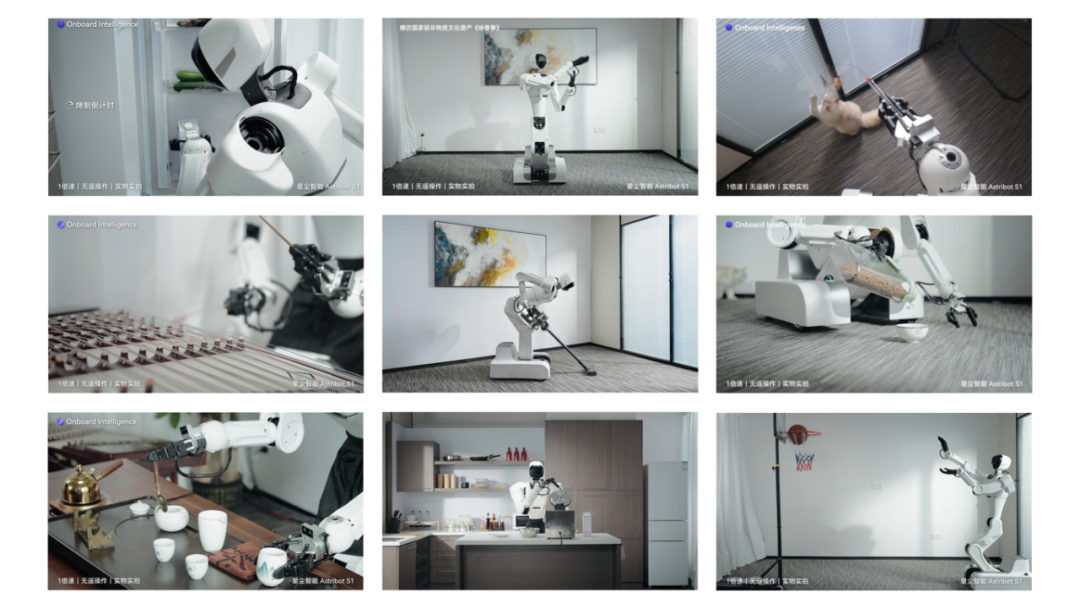
Astribot S1 demonstrates complex planning and fine manipulation.
ReSpark: When founding Astribot in 2022, you proposed building robots suited to AI. Where did that thinking come from?
Lai Jie: AI development was the starting point, with its combination with robotics the most important new variable. LLMs, VLMs and multimodal systems are powerful, but large models have not reached the intelligence we want. I felt existing internet data were approaching exhaustion as a source of new information. Where would additional information come from? Robots. This is my assessment of data limitations, not a literal claim that every usable online dataset has already been consumed.
This is precisely when robots should play a role. They can do two important things.
First, physically interact with the world and keep trying, like children. Second, introduce physical information that existing internet data do not provide.
I believe those additional data can help AI make a major leap and build models that genuinely understand the world.
The starting point is AI progress, but the qualitative change at this moment comes from combining it with robotics.
Ultimately, it produces what we call a world model. From that perspective, saying which comes first is difficult. Not everyone sees the opportunity that way, so from day one I told the team to build a robot designed for AI.
ReSpark: What does designing for AI mean, and how does it differ from earlier robot-design thinking?
Lai Jie: At Baidu, training robots with AI was painful. Using RL, a model could crash the robot into a table shortly after starting. Repairs might take two or three weeks before training resumed. Many people therefore chose simulation and thought robots and AI were inherently difficult to combine.
I think the cost of trial and error should be minimized. Giving a two-year-old’s mind a two-meter-tall body with powerful muscles, then asking it to develop intelligence, is an inappropriate setup.
A robot should explore more gently, like a child: accumulate experience in its own way without causing major damage, gradually improving its intelligence.
At Astribot, our transmission choices, force control and upper-body configuration all aim for more human-like behavior suited to AI. We understand training’s pain points and robot design, allowing us to design bodies better suited to AI learning.
ReSpark: How does this appear in the S1? What features should it have?
Lai Jie: We use a relatively uncommon cable-driven transmission. Years ago, in a door-opening project, I first asked why a blind person could open a door but a robot struggled. Vision matters, but something fundamental was missing: sensing and controlling force. I call it “intelligent strength.” We must supply force information and let the model learn from it.
We also explored the configuration. Our goal is AI-driven training, initially using human data. For example, we tried human skeletal data, but a conventional collaborative arm retained mainly end-effector information, losing much of the joint information. Differences in proportions and movement matter: greater human–robot differences mean more information loss; smaller differences improve transfer. Mapping onto a more human-like configuration reduces loss, so we want robot movements closer to human ones.
This concerns hardware structure. Pure AI researchers may not consider it, while traditional robot designers may not have imagined it either. Thinking solely from robotics or AI is incomplete. We are not merely designing a tool to complete tasks; understanding the data logic and deeply integrating the two is central.
From the beginning, we committed to that integration and breaking traditional boundaries. I think that mindset will be especially valuable.
ReSpark: Why choose cable drive? What special advantages does it have from a Design for AI perspective?
Lai Jie: We considered various transmissions. For human-like behavior and safety, we use cable drive in key body parts because we want excellent force transmission.
Before 2021, I mainly worked on locomotion, including wheeled-legged, bipedal and quadrupedal robots. A turning point came around 2018, when Mini Cheetah revealed its “secret”: integrating planetary gearing into an external-rotor motor. A seemingly simple innovation greatly improved force-tracking capability. This is my recollection of the development period.
Earlier, we mainly relied on zero-moment-point (ZMP) control. We gradually moved toward model predictive control (MPC) combined with RL. Improved force control drove the corresponding software and algorithm advances.
We tested different gear ratios and transmissions for the best force transfer while minimizing friction and other adverse effects. Initially intended for locomotion, similar needs later appeared in robot arms.
After extensive exploration, we chose cable drive. Optimizing it allowed us to increase the reduction ratio and balance transmission efficiency with force-control performance.
ReSpark: Have long-term issues, such as readjusting cable transmission, been resolved?
Lai Jie: We have addressed them. Initially, problems arose from the transmission’s inherent characteristics. Better materials and algorithmic compensation substantially improved stability and reliability. In our lifetime tests at the time, performance approached that of other transmission methods.
The algorithm requirements are demanding. We develop many components ourselves, including the motor drives. Core algorithms must run directly in the drives at high frequencies to compensate for cable-transmission nonlinearities.
Our accumulated experience connects these elements into a complete solution. We will keep iterating and optimizing it.
ReSpark: What are your next hardware priorities?
Lai Jie: Robotics still lacks two things: truly excellent hands and truly excellent touch. We continue working on both.
Dai Yuan has published more than ten related papers on tactile research in Science and Nature-family journals, as described in this interview. Human touch involves four important types of cutaneous mechanoreceptors, each with a role.
Current tactile sensors, including ours, reproduce only some aspects of one type rather than combining all four. I am not saying all four must necessarily be replicated. We need data and models to close the loop.
We want the closed loop to reveal how tactile systems should be designed. Detecting pressure or other physical information is only part of it. What matters is the full loop from sensing through planning to control.
Hands and touch will be our two major hardware priorities. We have worked on hands for years, including at Tencent. Robot bodies may already have strong hardware whose potential needs AI to unlock, but hand hardware and AI integration remain immature. Developing that integration will be a focus.
ReSpark: Do you develop the tactile system yourselves? Which approach do you use?
Lai Jie: We have a high-frequency sensor array: electronic skin inspired by human skin, operating at 1 kHz. In an earlier model-based experiment, the system detected slipping, adjusted pose and established a stable grasp in about 30 milliseconds at that frequency. With lower frequencies, it could fail. That is part of our foundation.
We are open to collaboration, working with universities and applying for national research projects. Effective tactile optimization requires closed-loop control. The difficulty lies at the planning or model level: how should a model use incoming tactile data to produce the desired behavior?
ReSpark: How do you choose between end-to-end and hierarchical embodied-model training?
Lai Jie: I do not see them as sharply opposing technologies; they complement each other. We therefore combine hierarchical and end-to-end models.
We use hierarchical models and large models to tackle unfamiliar problems where we lack data. During execution, we collect data, then train an end-to-end model for that local setting, progressively refining it.
ReSpark: What role do large multimodal models play?
Lai Jie: A crucial one. My fundamental intuition is that the world has more dimensions than spatial geometry alone. Without enough representational dimensions, you cannot uncover relationships.
Large models place data in a high-dimensional representation and find relationships across dimensions and viewpoints.
That is essentially what multimodal models do. We have abstract representations and internet data. Physical-world data need alignment, completing missing information and predicting the future, then guiding robot behavior. That is their central role.
ReSpark: Data are central to embodied-model training. What do you collect, and what is distinctive about your approach?
Lai Jie: We use third-person video, motion capture and teleoperation.
Because we make the robot’s behavior sufficiently human-like, third-person video is widely useful in our applications.
We have our own collection methods and also use abundant internet video. We want robots to learn by observing human movements, like children. Those videos work for our robots, but if a robot’s configuration differs too much from a human body, skeletal mapping can be incompatible. We therefore minimize that difference.
We also use motion-capture equipment for more precise human-motion data. High-precision, highly dynamic recordings use motion-capture suits. The datasets cover many everyday activities.
Some data come from teleoperation. VR is interesting: operating a robot through VR can both assist it remotely and collect data.
ReSpark: Do you use simulation data?
Lai Jie: Yes, and in some respects they resemble our video datasets. People mention missing friction or other physical effects, but I think the biggest drawback is the mismatch in noise distributions. Real-world descriptions always have errors and noise; idealized simulation often fails to reproduce them. This is about modeling and measurement error, rather than physical laws themselves being invalid.
Our core is a high-dimensional space. We analyze whether different data fill it and assess their errors. Third-person data provide skeletal and joint detail, but their larger errors must be communicated to the model. Simulation is often idealized and lacks real environmental variation and noise. We emphasize the robot’s first-person information because it most directly and completely describes manipulation, but it is also the most expensive to collect.
Ultimately, we care about what information the data contain rather than the collection method. Real and simulated sources should complement each other in filling that representation.
ReSpark: You said robots can provide physical-world data that improve AI. That differs from the more common view of AI serving robots?
Lai Jie: There is an important point here. In computing, CPU improvements and the evolution of software and applications continually drive one another. Another issue is online data: the internet now contains extensive generated content alongside traditional material. Continually training on it can, in my view, reinforce distortions or biases. That is a concern about data quality, not a claim that all synthetic data are necessarily harmful.
AI therefore needs new sources. Internet data contain decades of accumulated human knowledge and real information that support training. Future progress cannot, I believe, rely solely on that; it needs real information from the physical world.
AI needs observations of the objective world to keep developing, and robots are important carriers for collecting them.
ReSpark: How will the relationship between AI and robotics evolve in the short, medium and long term?
Lai Jie: Over two to five years, I expect closer integration between world models and robots, forming a beneficial loop between robot-generated data and the models robots use. Many paradigms are still exploratory; even our collaborative projects are just starting. These horizons are relative to the December 2024 interview.
In five to ten years, I think robotics’ contribution back to AI will become more apparent, and AI will spread through many industries.
Why? Large-scale internet data already enabled a progression from tools to data to models, especially for deep learning.
Robot data contain many physical relationships. In my view, they are already aligned within a physical setting.
That differs from our early work with word vectors. Isolated symbols have little meaning without context. Robot observations have physical meaning that can be expressed through differential equations and noise distributions. Their physical alignment may therefore make training more direct and easier.
Robots and people
A new relationship

----------
----------
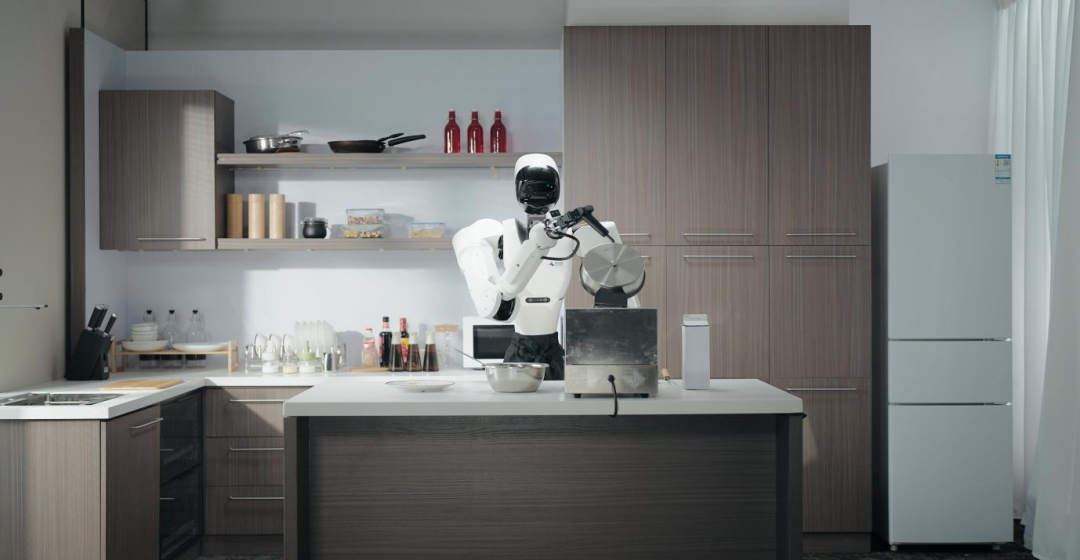
Astribot S1 making waffles.
ReSpark: More participants keep entering embodied robotics. Where does Astribot position itself among companies in China and abroad?
Lai Jie: I have said that commercial competition is defined by markets or users. At this stage, we should jointly advance technology. Instead, I have noticed less communication and growing divisions, which differ from my initial expectations.
I do not think commercial categories can yet be clearly defined. Future markets, customers and each company’s activities will change. We may see better examples combining world models with robots soon, perhaps by the middle of next year. That would not surprise me; I am working toward it. “Next year” here refers to 2025.
People often still see positioning too narrowly, as working within one specific application. Over time, the industry may become enormous, and each company will find its own position and choices.
ReSpark: Looking five and ten years ahead, what deployment progress do you expect?
Lai Jie: Market size depends on cost. I strongly believe in China’s supply chain: as more people participate, prices can fall rapidly. Eventually, many will develop or use robots directly. Within five years, I even expect two possible forms of market to emerge.
One resembles internet cafés: robot experimentation spaces near schools, where people build things or participate in competitions.
The other could be a robot “gaming” market. Games played a huge role in computer history, expressing both software’s potential and human interests. They stimulated understanding of hardware and demand for it.
A particular combination of AI capabilities and robots might change people’s mindset in an entirely new way. Rather than simply asking robots to work, people may interact with them and form a different relationship.
After five years, I think adoption may broaden. That need not mean a robot in every home immediately. Like early computers placed in convenience stores or hotels for guests, shared access can lower the learning barrier.
As people gain useful experiences, robotics will spread and mature. Five years from this interview, I expect it to be more common and increasingly familiar and accepted.
ReSpark: These examples seem more about everyday life—games, entertainment and services—than industrial settings?
Lai Jie: I tend to think about creating new value rather than replacing existing activity. That means helping an owner create more value, not merely save money. In industry, when would people pay more for personalization? A standard product might cost 10 yuan, while a fully customized one could cost 20. If robots make that possible, factories’ needs change. Robots offer flexibility and personalization, increasing profits rather than merely cutting costs.
That is incremental value: robots help create more, beyond saving money. Like computers, I do not think this generation of robotics is principally about cost reduction.
ReSpark: Then a robot becomes more than a tool for completing tasks?
Lai Jie: We keep asking whether robots should merely do something for us or provide tools for generating new content. That distinction is crucial.
A content-creation tool gains value as content grows. A computer with only one document application would have little appeal; remove every third-party app from a phone and people would not want it. Home robots cannot all be restricted to the same fixed tasks.
From the start, we asked whether AI plus robotics could become a platform. Robots can do so much, and we want to reduce development difficulty so more people participate.
Reducing difficulty may produce some applications, but that is not our central objective. We lower development barriers, supply-chain costs decline, more of the resulting profit opportunity reaches developers, and they keep creating new content. That is the business model we envision.
Ted: In our discussions in 2022, we noted that PCs and phones became widespread ultimately because of killer apps. We wondered what robotics’ first killer app would be.
Then we realized we need not design it ourselves. We can provide developers with foundational frameworks, an SDK and excellent hardware. Let them build and iterate; they will create their own killer apps rather than follow a direction we prescribe.
Lai Jie: Our staff already feel that change. Even administrative colleagues, wearing VR headsets and taking part in robot-operation tasks, undergo a striking shift in perspective. Seeing through the robot’s viewpoint, they discover many things it could help them do.
Natural-language skill execution makes their imagination leap. Combining skills suggests seemingly unlimited possibilities. The feeling differs entirely from placing a robot in a factory and convinces me this is what we should pursue.
I believe technologies like PCs and phones deeply move people when they first encounter that turning point. As robots enter everyday life and become widely used, they can catalyze changes in work and thinking, beyond being tools. Real experiences of what they can do help people believe in the field’s potential. That is the opening for robots to become general-purpose platforms like PCs and phones.
The starry sky above and the moral law within

----------
----------
ReSpark: When did your interest in robots begin?
Lai Jie: Very early. As a child, I watched Short Circuit. Its robot, Johnny 5, begins as a military robot, then develops something like emotions after being struck by lightning. In my recollection, he can perform human-like experiments, such as figuring out a coffee cup’s shape on paper, demonstrating a kind of emotional awareness. That sparked my interest. [Editor’s note: Short Circuit is the film’s title, not the robot’s name. The scene is Lai’s childhood recollection.]
I still remember wanting my first robot’s appearance to reveal structural and design details rather than simply cover them with a shell. That came from watching the film at about four or five years old. I have been fascinated ever since and have never left the field.
ReSpark: After two years building Astribot, with inevitable ups and downs, what reflections stand out?
Lai Jie: Recently, I read a line attributed to a French thinker: life is sailing an ocean of uncertainty, replenishing supplies on islands of what we know.
It reminded me of these two years. I have a large, distant goal. I drift at sea, face wind and waves, paddle hard, and seek supplies and partners on each island.
I am gradually realizing entrepreneurship is not necessarily extraordinary. It is an ordinary process, but one through which I keep moving forward. I feel how it changes me and strengthens and develops the team. My understanding of the journey has become calmer and more resolute.
ReSpark: How do you relax outside work? What do you enjoy?
Lai Jie: I like looking at the stars. Does that count?
ReSpark: Stars in the sky? [Laughter.]
Ted: He is being modest; he is quite serious about it. He once took my daughter stargazing, bringing professional equipment to a very dark park. It was the Mid-Autumn Festival. We saw the Moon and its craters clearly. Children gathered around, passersby stopped to ask questions, and my daughter was delighted.
Lai Jie: Yes. Sometimes I go to Nansha, and sometimes Zhongshan. The skies are clear with little light pollution. We drive over with equipment and set everything up. Some photographs require waiting two or three hours. I sit quietly beside the equipment and think. I enjoy being immersed in it and feeling mentally clear. It is a hobby, but also a way to regulate myself and relax during entrepreneurship.

The Moon photographed by Lai Jie.
ReSpark: Looking ahead, what possibilities do you hope Astribot’s robots will open?
Lai Jie: I strongly connect with Kant’s image of the starry sky above and the moral law within. I interpret the sky as the physical world and its laws. The moral law represents Astribot’s values, an idea Dai Yuan inspired in me. This is my interpretation of Kant’s thought.
We are building a platform where everyone can participate, develop, create and experience robots’ possibilities. Those ideas are central to our team; I was imagining and planning them even before founding the company.
One day, when a robot completes a journey around the Moon, everyone will look up and feel the universe’s vastness and mystery. It will awaken imagination and anticipation of the unknown—some of humanity’s deepest feelings and aspirations.
We build robots hoping to make that possible, helping humanity broaden its horizons and explore more possibilities. People may not believe it now or may find it impossibly remote, but one day they will believe, see and feel it. In a sense, robots free human creativity and curiosity. That is the value we truly pursue…